

UAE powers ahead with Dh6 billion mega corridor to transform Dubai-Sharjah-Ajman traffic
Policies under consideration seek to manage rising vehicle numbers across the Emirates
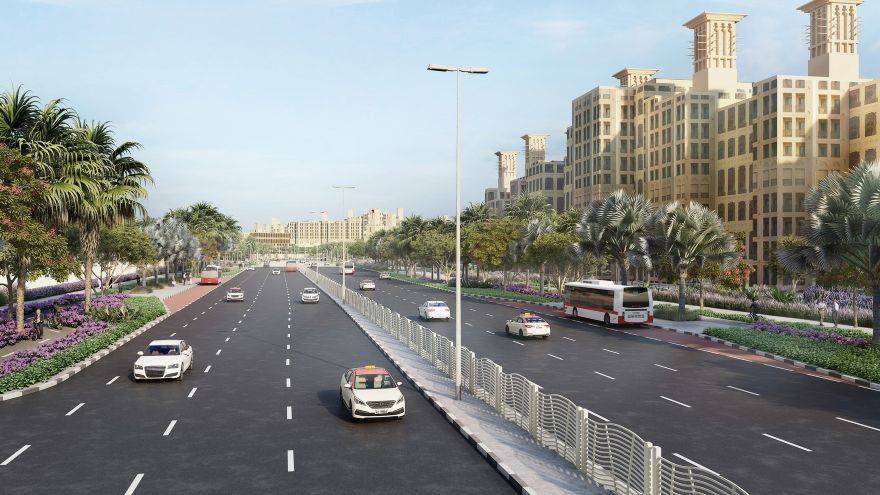
DUBAI – The United Arab Emirates (UAE) is advancing a major transport transformation aimed at easing congestion across its busiest inter-emirate corridors, particularly between Dubai, Sharjah and Ajman.
Senior officials, led by Suhail Mohamed Al Mazrouei, Minister of Energy and Infrastructure, convened at the first meeting of the UAE Infrastructure and Housing Council for 2026 to review key mobility initiatives.
The discussions centred on expanding federal road capacity, strengthening public transport networks, and introducing long-term strategies to manage rising vehicle numbers. These efforts align with the country’s broader ambitions under the ‘We the UAE 2031’ vision, which places strong emphasis on sustainable mobility, enhanced connectivity and improved quality of life.
His Excellency Suhail Mohamed Al Mazrouei, Minister of Energy and Infrastructure, chaired the first meeting of the UAE Infrastructure and Housing Council for 2026. The meeting focused on monitoring the implementation of strategic initiatives and projects aimed at developing the… pic.twitter.com/ZYompPXi0Y
— وزارة الطاقة والبنية التحتية (@MOEIUAE) April 6, 2026
The council examined multiple strategic projects, including a comprehensive public transport framework and the progress of the Fourth Federal Corridor, a flagship infrastructure development designed to transform inter-emirate travel. The meeting also highlighted coordinated efforts between federal and local authorities to ensure seamless integration of new infrastructure with existing urban plans. Alongside this, policymakers reviewed data-driven studies addressing traffic congestion and the rapid increase in vehicle ownership, particularly in high-density urban areas.
Fourth Corridor
At the centre of the infrastructure strategy is the Fourth Federal Corridor, a large-scale road project spanning approximately 68 kilometres. The corridor will feature between six and eight lanes in each direction, 10 major intersections and four flyovers, with an estimated investment of Dh6 billion. The project is designed to significantly enhance road capacity while easing pressure on existing highways that currently experience heavy commuter traffic.
Technical updates presented during the meeting included revised route alignments and enhanced coordination with local authorities to ensure the corridor integrates smoothly with ongoing development plans. Once completed, the corridor will serve as a critical artery within the national road network, improving traffic distribution and reducing bottlenecks across key transit points. It will also support the movement of goods and services, reinforcing the UAE’s position as a regional logistics hub.
The Fourth Federal Corridor joins existing major highways such as the E11 (Al Ittihad Road), E311 (Sheikh Mohammed bin Zayed Road) and E611 (Emirates Road), collectively forming a robust network that connects all seven emirates. Officials noted that this expansion reflects a long-term investment in future-ready infrastructure, designed to accommodate population growth and increasing economic activity.
Public transport
A key component of the UAE’s mobility strategy is the development of an integrated public transport system linking Dubai, Sharjah and Ajman. The council reviewed a detailed plan comprising 10 main routes supported by Bus Rapid Transit (BRT) systems and dedicated lanes. These routes are designed to connect directly with metro stations and major urban centres, offering commuters faster and more reliable alternatives to private vehicles.
BRT systems operate on exclusive lanes, allowing buses to move with minimal delays, similar to metro services but with greater flexibility and lower infrastructure costs. The proposed network aims to significantly reduce travel times across one of the UAE’s most congested corridors while enhancing accessibility for daily commuters. Authorities emphasised that the plan will play a crucial role in easing pressure on road networks and improving the overall efficiency of the transport system.
In addition, efforts are underway to strengthen connectivity between Ajman and major federal corridors, including the Third and Fourth Federal Corridors. This expansion will provide alternative routes for motorists, helping to distribute traffic more evenly and reduce congestion during peak hours. The initiative also supports the broader goal of creating a fully integrated national transport ecosystem that links residential areas with business and industrial zones.
Mobility strategy
The council also explored policy measures aimed at managing the growth in vehicle ownership, which has seen a sharp increase in recent years. Officials highlighted that vehicle growth in Dubai has exceeded 8 percent, compared with the global average of around 2 percent, underscoring the need for updated regulations and sustainable mobility solutions.
Proposed measures include expanding public transport options, improving inter-emirate road networks, and introducing new mobility models that encourage reduced reliance on private cars. These strategies are intended to ease congestion, lower emissions and improve overall traffic flow across the country.
Discussions also covered lessons learned from recent weather-related disruptions, with a focus on enhancing preparedness and strengthening coordination between relevant authorities. Improved response mechanisms are expected to ensure continuity of traffic movement during adverse conditions, while safeguarding road users and maintaining service reliability.
Officials reaffirmed that advancing public transport remains a top priority, with ongoing efforts to integrate different modes of mobility into a seamless system.